
DIHEXA
Safety Considerations
Although preclinical studies suggest Dihexa is well- tolerated and non-toxic in short-term use, the long-term safety profile is not fully known. Because it acts on the c- Met receptor, which is also involved in certain types of tumor growth, there is a theoretical concern about carcinogenicity with extended or unregulated use. No human clinical trials have been completed with Dihexa directly, though a related prodrug, fosgonimeton, is currently undergoing trials for neurodegenerative conditions. Until more clinical data are available, Dihexa should be used cautiously preferably cycled and only under guidance of a knowledgeable provider.
Molecule / Formula
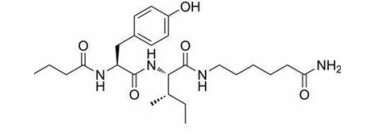
C27H44N4O5
DIHEXA 10mg/5mL DOSING
10 units low dose
15 units moderate dose
20-25 units typical dose
Start low, acclimate, titrate up based on how you feel
What Is the DIHEXA
Dihexa, also known as PNB-0408, is a synthetic oligopeptide derived from angiotensin IV. It was specifically engineered to cross the blood-brain barrier and remain stable in the body, with excellent oral bioavailability.
How It Works
Dihexa works by binding to hepatocyte growth factor (HGF) with extremely high affinity, amplifying HGF’s activation of the c-Met receptor. This signaling pathway is one of the most powerful neurotrophic mechanisms in the brain. By enhancing c-Met activity, Dihexa promotes synaptogenesis (the formation of new neural connections), neurogenesis (the creation of new neurons), and improved neuronal survival. Studies have shown that Dihexa’s synapse-building effects are several million times more potent than those of brain-derived neurotrophic factor (BDNF). It also reduces inflammation in the brain, downregulating harmful cytokines like IL-1β and TNF-α while increasing anti-inflammatory markers like IL-10. In animal models, it has reversed cognitive decline, improved memory and learning, and restored damaged neural pathways through PI3K/AKT signaling.
Benefits
TB-500 is often used in therapeutic and performance settings for:
Preclinical models have demonstrated dramatic improvements in cognition, memory, and brain resilience following traumatic injury or neurodegenerative disease.
Dihexa has shown the ability to restore lost synaptic density, enhance learning capacity, and improve long-term recall.
Its half-life ranges from 9 to 12 days depending on administration, making it a long-acting therapeutic with sustained effects.
What sets Dihexa apart is its blood-brain barrier penetration and its oral availability traits rare among neuropeptides. It has emerged as a promising compound in the field of neurorepair, neuroplasticity, and even early interventions for Alzheimer’s and Parkinson’s disease.